Signs Your Home Needs Foundation Underpinning
Cracks that keep coming back after you patch them. A floor that noticeably slopes toward one corner. A door that used to close fine and now sticks every time. On their own, any one of these could be nothing. Together, they're often the first visible signs of a foundation that's settling — and the earlier that gets addressed, the simpler the fix tends to be.
The Warning Signs Worth Paying Attention To
Foundation settlement rarely announces itself all at once. It shows up gradually, usually as:
Cracks in drywall or brick that reappear after patching, especially diagonal cracks near corners of doors and windows
Sloping or uneven floors, noticeable when a ball rolls on its own or furniture no longer sits level
Doors and windows that stick or no longer latch properly, even though nothing about them has changed
Cracks around basement windows or along the foundation wall itself, particularly ones that widen over time
Gaps opening up between walls, ceilings, and trim that used to fit tightly together
One crack after a cold winter isn't necessarily a structural problem — houses move slightly with the seasons. What matters is whether the signs are getting worse, multiplying, or showing up in combination. That pattern is what points toward settlement rather than normal, minor movement.
What Underpinning Actually Does
Underpinning doesn't reverse the settling that's already happened. What it does is stop it from continuing, by transferring the weight of the structure from a foundation that's no longer providing reliable support down to stable ground beneath it.
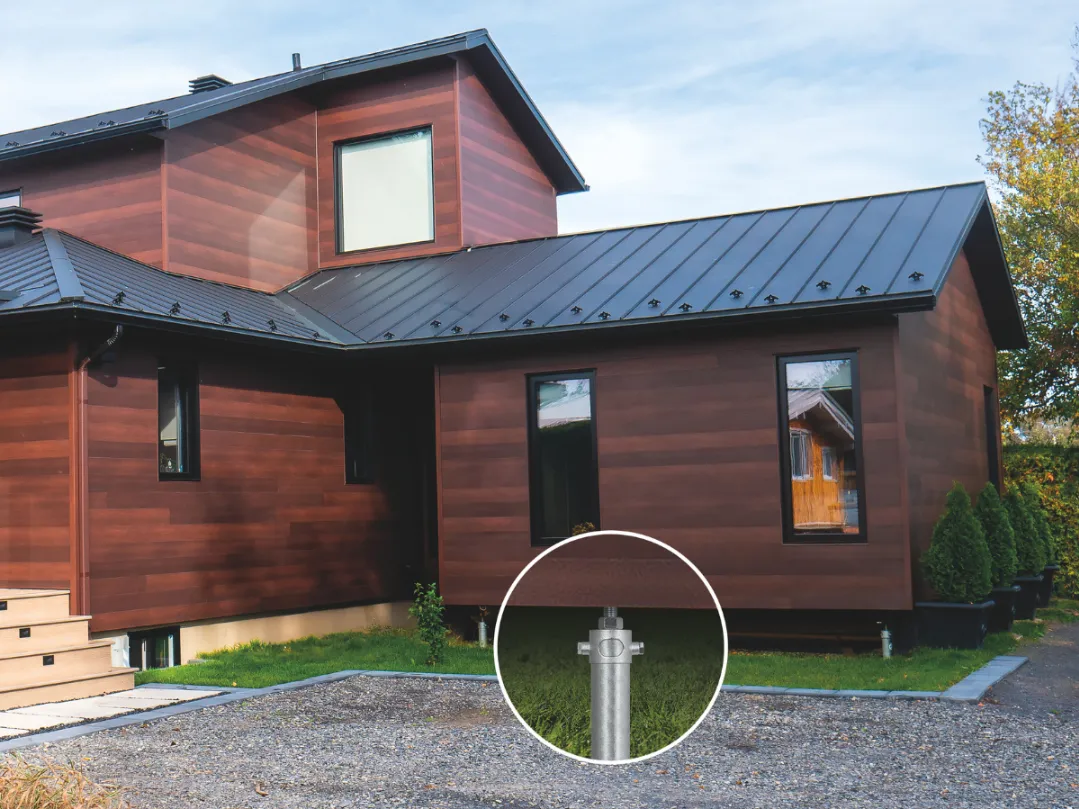
With screw pile underpinning, steel piles are mechanically driven or rotated into the ground at strategic points around the foundation until they reach load-bearing soil. Brackets connect those piles to the existing foundation, so the structure's weight is carried by the piles instead of resting entirely on soil that's shifted or lost bearing capacity. Once that support is in place, further settlement is generally halted.
Why Screw Piles Instead of Traditional Concrete Underpinning
Traditional underpinning methods often involve extensive excavation around the foundation, poured concrete, and a curing period that can stretch the project out over days or weeks. Screw piles skip most of that. They're installed with compact equipment, don't require the same scale of excavation, and can typically go in without the multi-week disruption a concrete-based approach involves — while still reaching the same load-bearing soil that gives a foundation reliable support.
That's a meaningful difference when the work is happening around an occupied home rather than open ground.
What the Process Actually Looks Like
Every underpinning project starts with an assessment — not a generic quote, but someone looking at the actual condition of your foundation, the pattern of the damage, and the soil the piles will need to reach. From there, piles are installed at the points identified during that assessment, connected to the foundation with brackets, and adjusted to make sure the load transfer is doing what it's supposed to.
This isn't a project where more piles or a bigger system is automatically better. The right configuration depends on what your specific foundation and soil conditions call for, which is exactly why this isn't something to plan from a general guide alone.
When to Call Someone
If you're seeing one or two minor signs that aren't changing, it's reasonable to keep an eye on them. If you're seeing multiple signs together, or cracks and gaps that are visibly getting worse, that's worth a professional look sooner rather than later. Settlement problems don't tend to resolve on their own, and the cost and complexity of addressing them generally grows the longer they're left unaddressed.
Frequently Asked Questions
Will underpinning fix cracks that already exist?
Underpinning stops further settlement; it doesn't undo existing cosmetic damage. Once the foundation is stabilized, existing cracks can typically be repaired without them reappearing from ongoing movement.
How do I know if it's settlement or just normal seasonal movement?
Minor, stable cracks that don't change are common and often not a concern. Cracks that are widening, multiplying, or appearing alongside sloping floors or sticking doors are more likely to indicate settlement and are worth having assessed.
How long does screw pile underpinning take?
It varies by the scope of the project and the number of piles required, but screw pile systems are typically installed significantly faster than concrete-based underpinning, often without the multi-week timeline concrete curing requires.
Can underpinning be done without major excavation?
In most cases, yes. Screw piles are installed with more compact equipment than traditional underpinning methods, which generally means less excavation and less disruption to the property around your home.
Get Your Foundation Properly Assessed
If you're seeing any combination of these signs, the next step is a proper assessment, not guesswork. Request a free quote from Postech Hamilton and we'll look at what's actually happening with your foundation before recommending a solution.